.svg)
Types of Braces for Kids and Teens in Ashburn, VA
When parents start searching for braces in Ashburn, the questions tend to pile up fast: Which type is right for my child? How long will it take? What will it cost? Braces work by moving crowded, gapped, or misaligned teeth into a healthier position. That means easier cleaning, a bite that works the way it should, and a smile your child actually feels good about. At NOVA Pediatric Dentistry and Orthodontics, Dr. Woo and Dr. Ullrich have been helping Ashburn families work through that decision for twenty years. They can walk you through it too.
For most families, the real decision comes down to traditional metal braces or Invisalign clear aligners. We also offer clear (ceramic) braces for older teens who want something a little less noticeable. And because pediatric dentistry and orthodontics are both here under one roof, your child's dental records, cleaning schedule, and orthodontic treatment all stay connected from day one. No faxing records across town, and no explaining your child's history to a new front desk.
Call (703) 729-7005 to set up a consultation and get a clear picture of what your child's teeth need.
What Parents Want to Know First
- Metal braces are the most common choice for kids and younger teens.
- The real decision for most families is braces versus Invisalign clear aligners.
- The bonding appointment takes about one to two hours. No shots, no drilling.
- Adjustment visits happen every six to eight weeks after that.
- Cost is reviewed in full at the consultation, including insurance and payment options.
How Braces Work, Step by Step
1. The Orthodontic Consultation
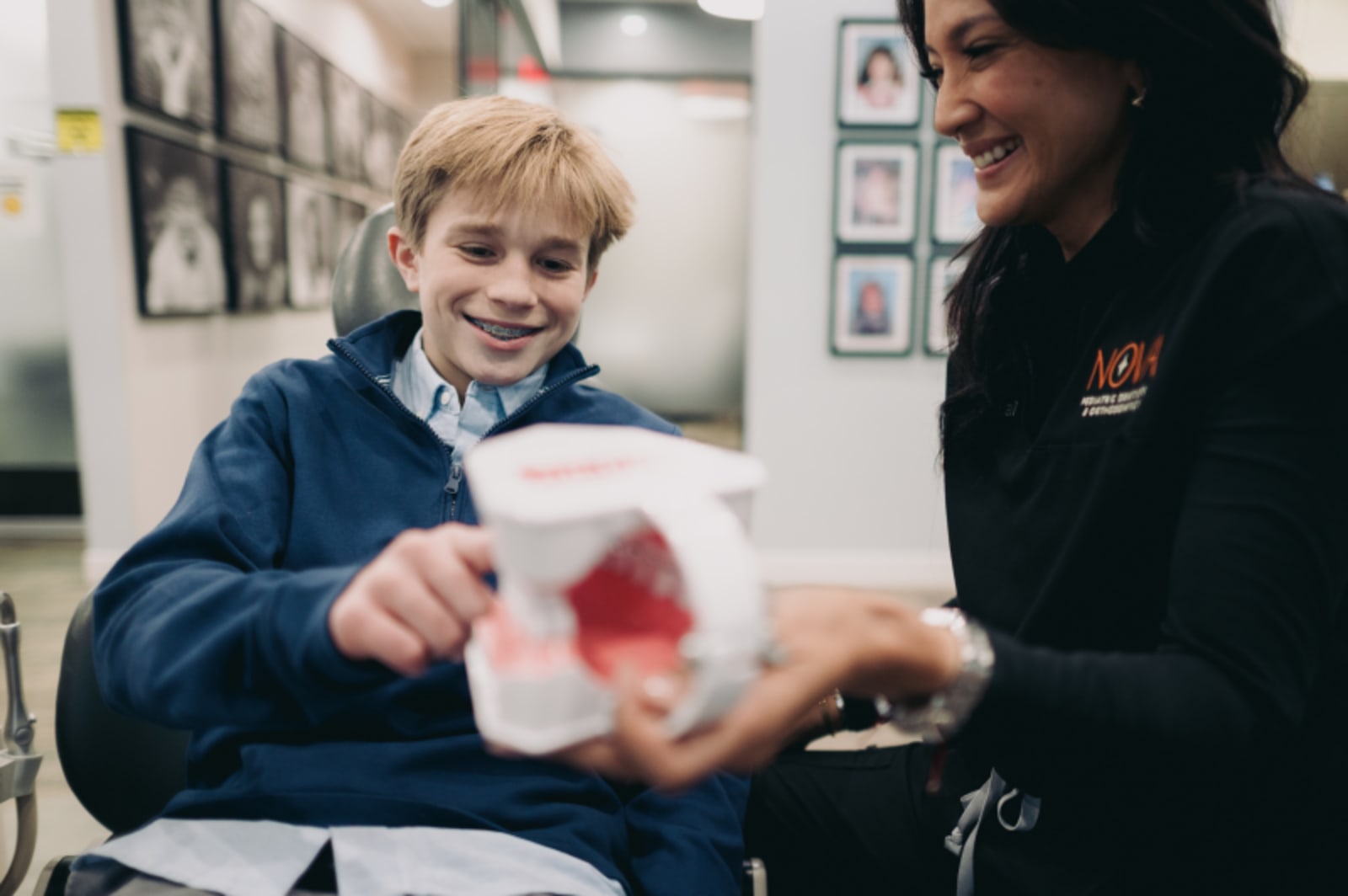
Dr. Courtney takes a close look at your child's teeth, bite, and how their jaw is growing. She'll take X-rays and photos, then walk you through exactly what she sees in plain, everyday language. You'll find out which treatment options make sense and whether now is the right time to start. If braces aren't needed yet, we'll tell you that honestly.
2. Bonding Day
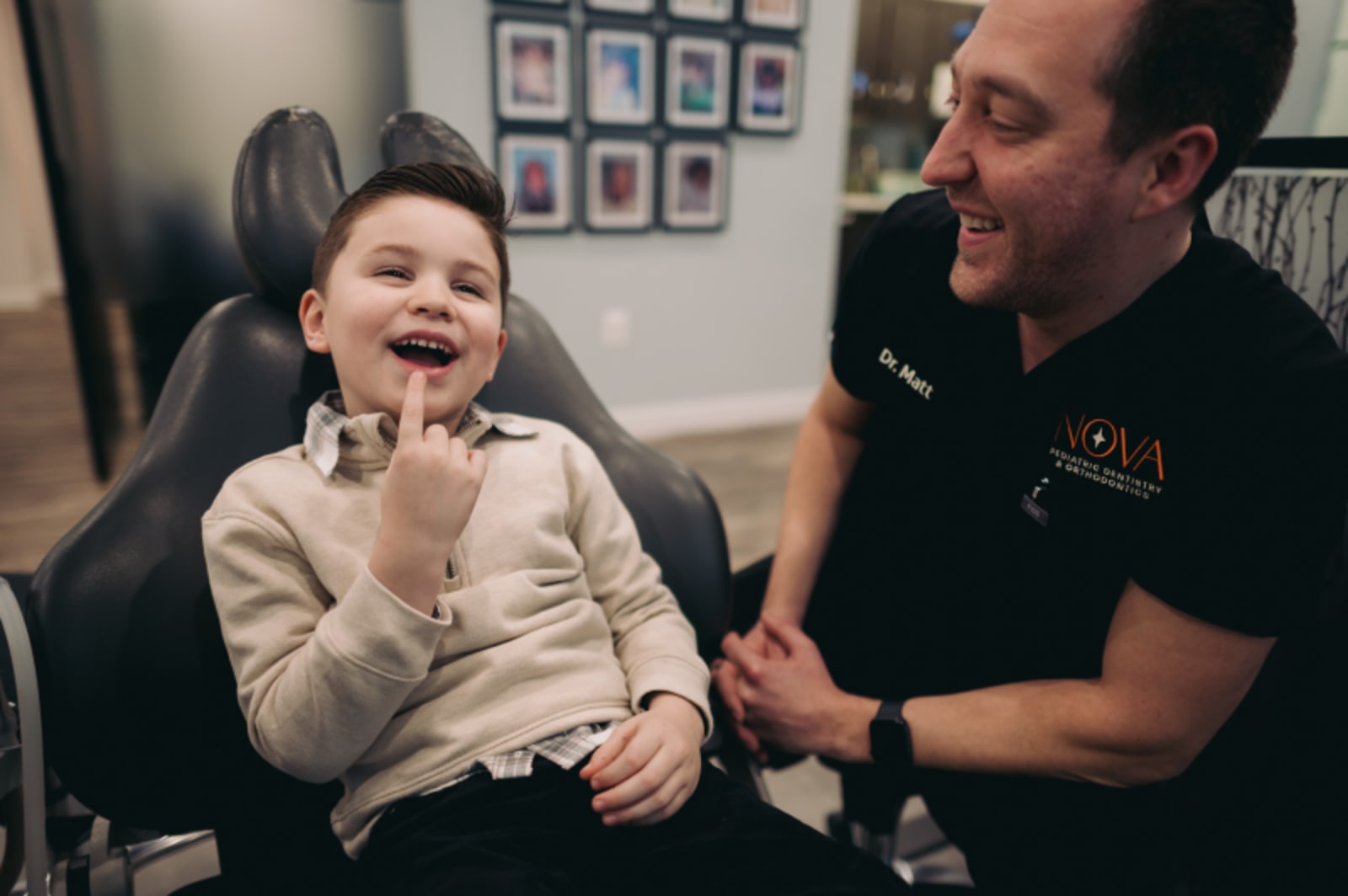
This is the day the braces actually go on. We clean and dry each tooth, attach a small bracket using dental adhesive, then thread a thin archwire through all the brackets and secure it with tiny elastic ties. Your child gets to pick the colors! There are no shots and no drilling involved. We talk your child through each step as we go and move at whatever pace feels comfortable for them.
3. Adjustment Visits
About every six to eight weeks, your child comes in so we can check on progress, change or tighten the wire, and swap out the elastics. These appointments are usually pretty quick. Since our pediatric and orthodontic teams share the same office, we can often schedule an adjustment visit on the same day as a regular dental cleaning. Some visits also include rubber bands that your child wears at home to help correct the bite. We'll show both of you exactly how to put them on.
4. Debonding and Retainers
When the teeth have reached their final positions, we remove the brackets and gently polish off the adhesive. Then we take new records to create your child's retainers. We love this appointment because it's a real milestone worth celebrating. Retainers hold the new positions while the bone fully settles around the roots.
What Braces Actually Do for Your Child
- Cleaner, healthier teeth. When teeth are crowded or overlapping, plaque hides in spots a toothbrush simply can't reach. That raises the chances of cavities and gum irritation over time. Straightening things out makes brushing and flossing actually work the way they should.
- A bite that works the way it should. Overbites, underbites, and crossbites put uneven pressure on teeth when your child chews. Over time, that wears certain teeth down faster than others. Correcting the bite spreads that pressure evenly across all the teeth.
- Lower risk of chips and injuries. Front teeth that stick out are more exposed. If your child takes a fall or gets bumped during a sport, those teeth are more likely to chip or break. Bringing them into alignment reduces that risk.
- Space for teeth that are still coming in. While your child is still growing, we can guide permanent teeth into the right positions. Catching things early often prevents bigger problems down the road, and in some cases, it can mean avoiding extractions later.
- More confidence at exactly the right age. Watching a kid stop covering their mouth when they laugh is honestly one of our favorite parts of this work. A smile your child feels good about matters, especially during the school years.
- Results that actually stick. Because braces are fixed to the teeth, movement happens on a consistent schedule. There is nothing for a busy kid to remember to put in or take out each day.
Metal or Clear Braces: Which Fits Your Child
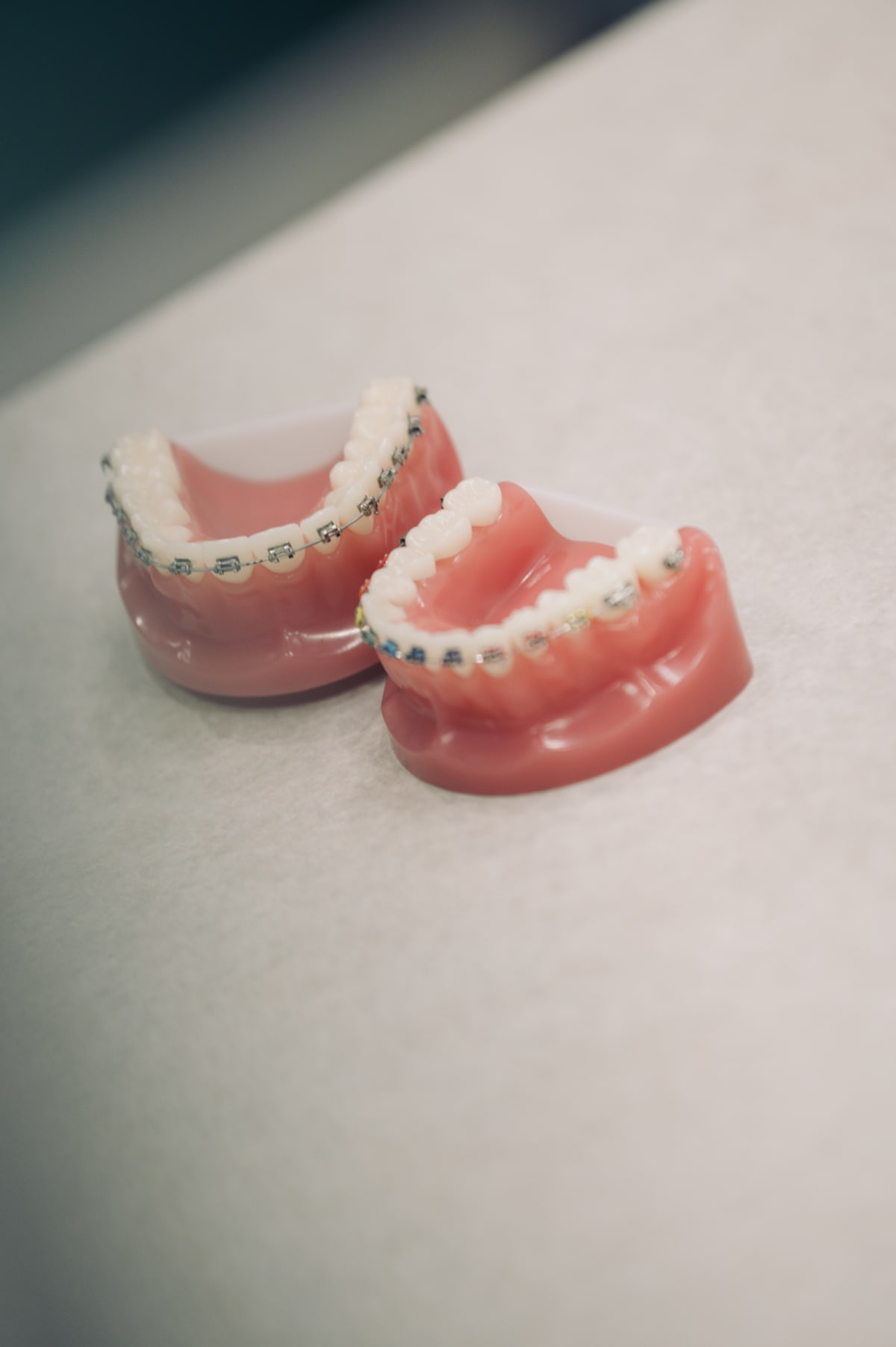
Metal Braces
These use small, smooth stainless steel brackets and are by far the most common choice for kids and younger teens. Metal braces are the most durable option, which matters when your child plays lacrosse, sneaks a piece of gummy candy, or is simply nine years old. At each visit, kids get to pick the color of their elastic ties, which makes it a little more fun.
Clear (Ceramic) Braces
Ceramic braces use tooth-colored brackets that blend in with the smile, so they're less noticeable than metal. They tend to appeal to older teens who care more about appearance. One thing to keep in mind: the brackets are a bit more delicate than metal, and the clear ties can pick up stains from things like curry or tomato sauce if brushing isn't consistent. We do offer ceramic braces at NOVA Pediatric Dentistry & Orthodontics, though metal is the more common choice for most of our younger patients.
When Invisalign Enters the Conversation
For most families, the bigger decision isn't metal versus ceramic. It's braces versus Invisalign clear aligners. Braces are fixed to the teeth, so they're working around the clock no matter what your child remembers to do. Aligners are removable and nearly invisible, which works really well for a motivated teen who will genuinely wear them the required 20 to 22 hours a day. Some bite issues are also better corrected with braces, regardless of what a patient prefers.
How Long Braces Treatment Takes
Most children finish in about 18 to 24 months. If your child only has mild crowding, treatment can wrap up sooner. A more involved bite correction may take a little longer. Every case is different, and Dr. Courtney will give you a realistic timeline at the consultation.
- Consultation: One visit, about an hour. Dr. Courtney takes records, reviews what she sees, and walks you through the full plan before anything is decided.
- Bonding: One longer appointment to put the braces on. Teeth usually feel a little tender for a few days afterward, then your child adjusts quickly.
- Active treatment: Check-in visits every six to eight weeks. At each one, we update the wire, check progress, and let you know how things are tracking.
- Debonding: One appointment to remove the braces and deliver retainers. This is the fun one.
- Retention: Retainers are worn full time at first, then just at night. This step is what keeps the results lasting.
Growth can also work in your child's favor, which is part of why we like seeing kids early. Because NOVA Pediatric Dentistry & Orthodontics keeps pediatric dentistry and orthodontics under one roof in Ashburn, cleanings and adjustments stay coordinated the whole way through.
Why Ashburn Families Choose NOVA PDO for Braces
We opened in January 2006, and some of the kids who came to see us back then now bring their own children here. That kind of trust means everything to us, and it shapes how we do things every single day.
- One office for both pediatric dentistry and orthodontics. Dr. Woo built the pediatric side right out of her residency at Children's Hospital Boston. Dr. Ullrich built the orthodontic side out of hers. Your child's cleanings and braces happen in the same place, with one shared set of records. No coordinating between two offices.
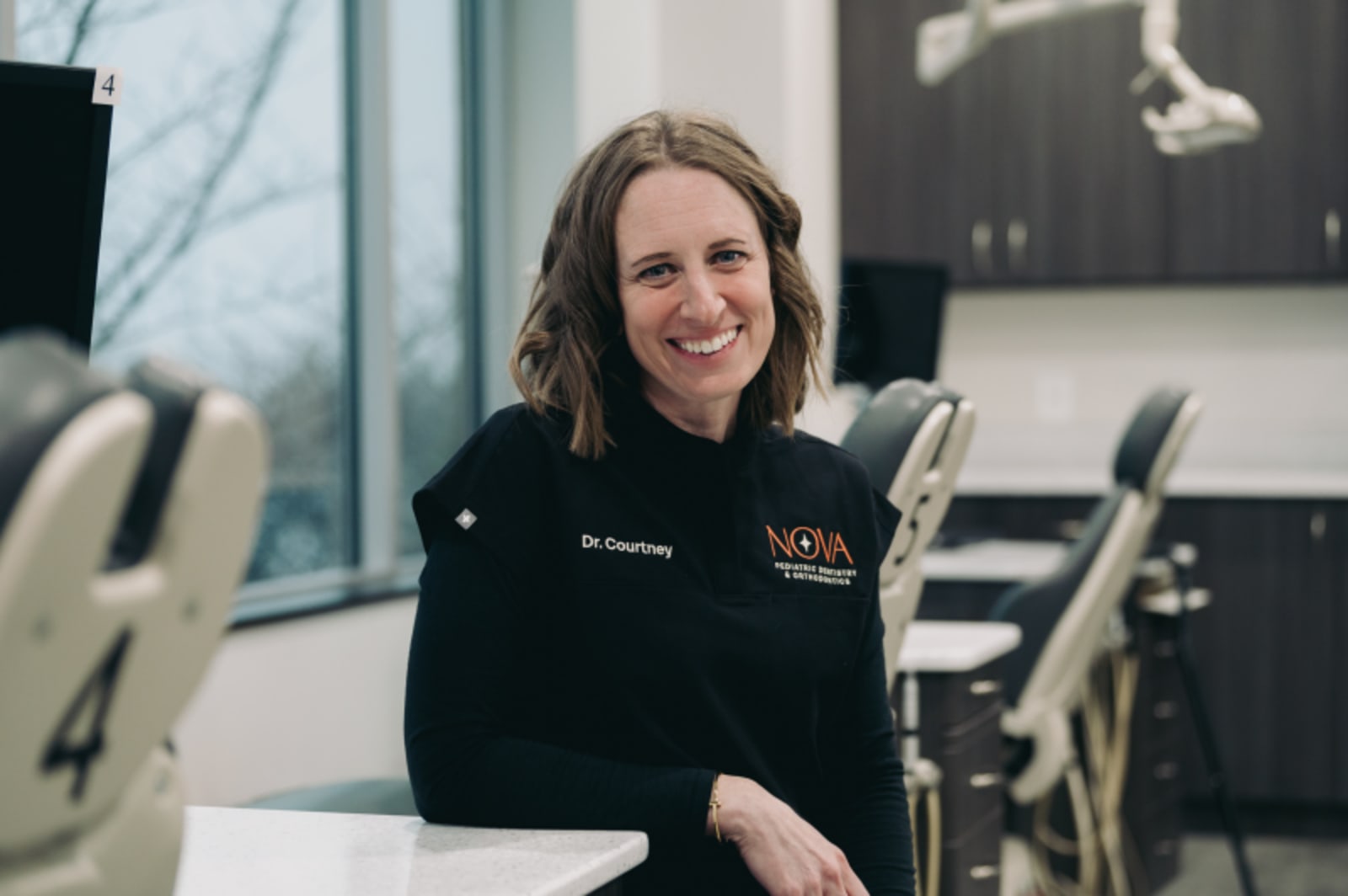
- An orthodontist who genuinely loves working with kids and teens. Dr. Courtney Ullrich got her dental degree from the University of Pennsylvania and completed her orthodontic training at Montefiore Medical Center. She has been leading orthodontic care here since she joined the practice.
- Care that works for every child. We have a lot of experience with children who have autism, Down syndrome, and sensory sensitivities. We use preview visits, visual schedules, and go at whatever pace your child needs.
- We tell you what your child actually needs. Our recommendations are based on what we see in your child's mouth, not on hitting a number. If the right answer is to wait, that is exactly what we will tell you.
FAQs About Braces
Does Getting Braces Put on Hurt?
Bonding itself doesn't hurt. There's no numbing or drilling; brackets are glued to the front of the teeth. Teeth do feel sore for a few days afterward as they begin to move, and again briefly after adjustments. We tell kids that honestly and give them ways to manage it.
What Age Do Kids Usually Get Braces?
Most start between about 9 and 14, once enough permanent teeth are in. The American Association of Orthodontists recommends a first orthodontic evaluation around age 7, which is about spotting developing problems early, not starting treatment that young.
Can My Child Play Sports and Instruments With Braces?
Yes. A mouthguard is essential for contact sports, and we'll help you get the right kind. Wind and brass players usually need a short adjustment period; wax over the brackets helps while lips toughen up.
Do Clear Braces Work as Well as Metal Ones?
They straighten teeth just as effectively. The differences are durability and stain resistance, where metal has the edge, which is why metal is the more common choice for kids and younger teens.
What if a Bracket Comes Loose or a Wire Pokes?
Loose brackets and poking wires are common and rarely urgent. Let us know and we'll get your child seen and comfortable as quickly as possible.
Let's Talk About Your Child's Smile
You don't have to have everything figured out before you come in. Just bring your child, and Dr. Courtney will take a look, walk you through what she sees, and give you a clear picture of what your child needs, when to start, and what it will cost. If the answer is "not yet," that's exactly what you'll hear.
Give us a call at (703) 729-7005 or request an appointment online, and we'll find a time that fits around school and activities. NOVA Pediatric Dentistry & Orthodontics has been the one place for all kids in Ashburn for twenty years, and we'd love to be that place for your family too.
Start your child’s smile journey
Please call (703) 729-7005 or request an appointment online to set up your first visit. We’ll be in touch soon.